Skoro každý týden narazíte na titulek, že umělá inteligence vezme práci milionům lidí. O pár dní později se objeví přesně opačný, že miliony nových míst naopak vytvoří. Obojí je svým způsobem pravda a ani jedno vám samo o sobě neporadí, co s tím máte dělat vy.
Pojďme se proto na tu otázku podívat přes čísla. Které práce ubývají, které přibývají a co si z toho odnést.
Míst má vzniknout víc, než jich zmizí
Světové ekonomické fórum ve zprávě Future of Jobs Report z roku 2025 odhaduje, že do roku 2030 zanikne celosvětově kvůli automatizaci a AI zhruba 92 milionů pracovních míst. Zároveň jich ale má vzniknout asi 170 milionů nových. Čistý zisk vychází na 78 milionů míst navíc.
V součtu to tedy vypadá dobře. Jenže je tu háček. Zaniklá a nově vzniklá místa nejsou stejného typu a nevyžadují stejné dovednosti. Účetní, které AI ubere půlku práce, se ze dne na den nestane datovým analytikem. Ta čísla popisují ekonomiku jako celek, ne osud konkrétního člověka. A právě proto je užitečné vědět, kterým směrem se ten pohyb ubírá.
Kde AI ukusuje nejvíc
Firma Anthropic, tvůrce modelu Claude, zveřejnila analýzu, která měří, jak velkou část pracovní náplně jednotlivých profesí dnes AI reálně zvládne. Nejvíc exponované je překvapivě programování, kde modely pokrývají zhruba tři čtvrtiny úkolů. Že v čele žebříčku nestojí rutinní administrativa, ale jedna z nejlépe placených technických profesí, je asi to nejzajímavější zjištění celé analýzy.
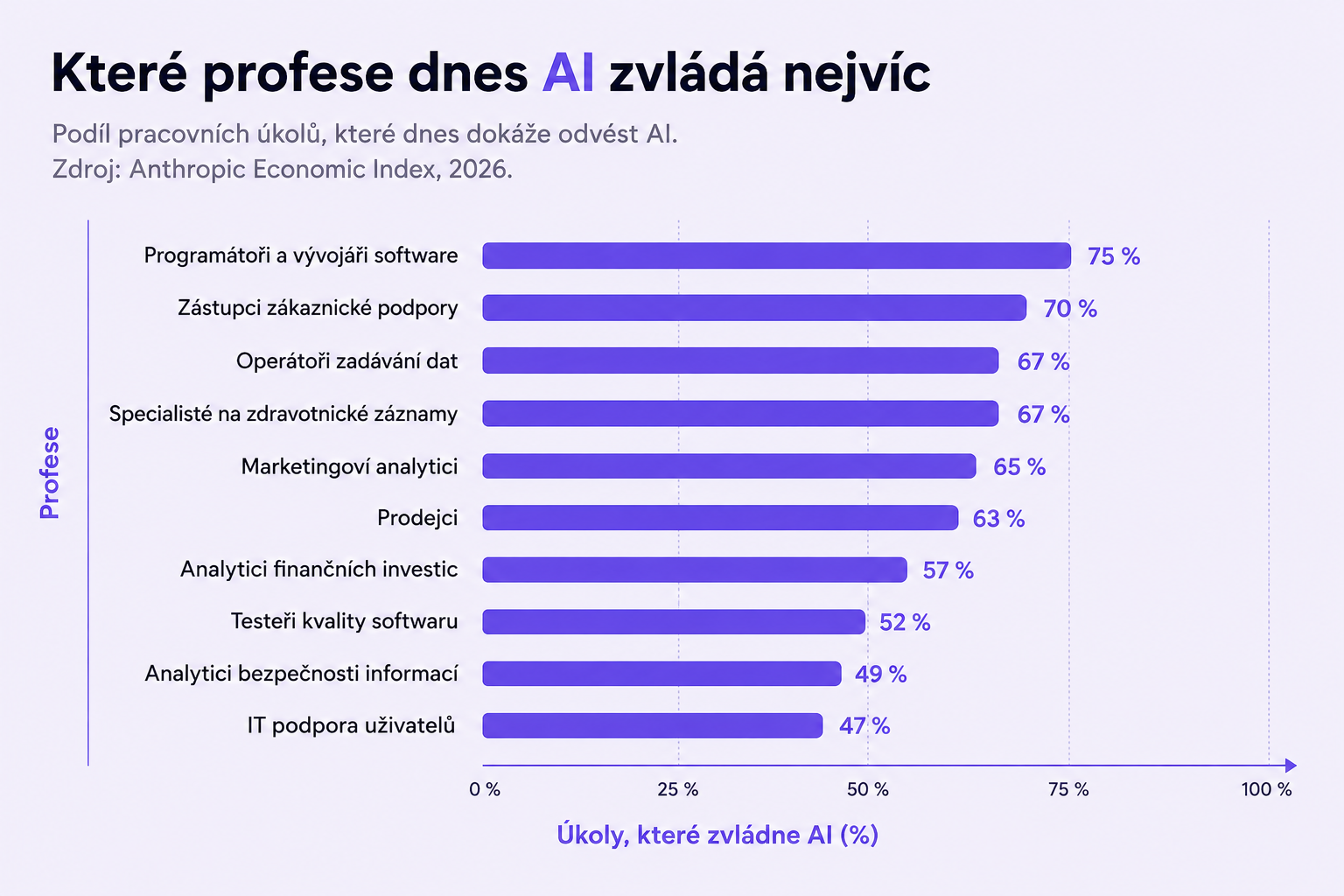
Ta čísla je ale potřeba správně přečíst. Neznamenají, že za pár let nebudou existovat programátoři. Znamenají, že velkou část toho, čím dnes tráví den, umí odvést stroj. Lidem zůstává rozhodování v nejasných situacích, kontrola výstupů a odpovědnost za výsledek.
Hezky je to vidět na překladatelích. Výzkumníci z institutu CEPR prošli americká data z let 2010 až 2023 a zjistili, že v regionech, kde se víc rozšířil strojový překlad, vznikalo znatelně méně nových překladatelských míst. Podle jejich odhadu takto nevzniklo zhruba 28 tisíc pozic, které by jinak vznikly. Klasického překladu slovo za slovem tedy skutečně ubývá. Zato přibývá práce pro lidi, kteří strojový výstup kontrolují, opravují a hlídají, aby text seděl kulturně a kontextově, ne jen jazykově. Profese nezmizela, jen se posunula o patro výš.
Co naopak vzniká
Žebříček LinkedIn Jobs on the Rise pro rok 2026, který sleduje nejrychleji rostoucí pozice v USA, je v tomhle docela výmluvný. Čtyři z pěti nejrychleji rostoucích rolí souvisejí přímo s AI. Vede AI inženýr, tedy člověk, který modely vyvíjí a nasazuje. Hned za ním je AI konzultant, který firmám pomáhá umělou inteligenci vůbec zavést. Následují lidé připravující trénovací data a výzkumníci strojového učení.
Zajímavější než tyhle očekávatelné role je ale to, co stojí v žebříčku hned vedle nich. Rychle rostou i technici datových center a lidé řídící stavbu nové infrastruktury. AI boom totiž netáhne jen softwarové profese, ale i docela hmatatelnou práci kolem serverů, chlazení a energie.
A pak je tu skupina profesí, které před pěti lety prakticky neexistovaly. Auditor algoritmů, který ověřuje, jestli systém někoho nediskriminuje – to bude v Evropě kvůli AI Actu čím dál důležitější. Kurátor trénovacích dat, který rozhoduje, na čem se model učí. Designér konverzačních rozhraní. Nebo správce flotily AI agentů, kteří firmě automaticky vyřizují objednávky a poštu. Trochu paradoxně tak i nedokonalost umělé inteligence vytváří práci. Někdo musí ověřovat, jestli si model něco nevymyslel.
Tři dovednosti, které nabírají cenu
Napříč všemi těmi čísly se táhne jedna linka. AI nahrazuje jednotlivé úkoly, ne celé profese, a jde po těch nejrutinnějších. Cenu proto nabírají tři věci.
První je schopnost ověřovat a interpretovat. Tedy nebrat jako hotovou věc to, co model vyplivne, ale umět posoudit, jestli to dává smysl. Druhá je hluboká znalost vlastního oboru. Čím líp rozumíte právu, medicíně nebo marketingu, tím spolehlivěji poznáte, kdy se AI plete, a tím cennější jste jako ten, kdo nad ní drží dohled. Třetí jsou měkké dovednosti, tedy komunikace, kritické myšlení a schopnost pohybovat se tam, kde není jasné zadání. Podle českých personalistů se mimochodem právě tyhle dovednosti posouvají z doplňkové výhody na hlavní konkurenční přednost.
Není přitom potřeba se hned učit programovat. Mnohem realističtější první krok je začít běžné AI nástroje aktivně používat ve své současné práci tak, abyste je uměli řídit a zkontrolovat. Kdo tohle zvládne, přestane být tím, koho AI ohrožuje, a stane se tím, kdo ji řídí.
Závěr
Trh práce se nepřeklápí ze dne na den a většina profesí nezmizí. Mění se ale jejich obsah a mění se rychle. Rutina se přesouvá na stroj a na člověku zůstává úsudek, kontext a odpovědnost. Kdo tuhle změnu vidí včas, má náskok. Kdo ji přehlíží, dozví se o ní až ve chvíli, kdy si jeho práci rozdělí kolegové a nástroje.
Můj názor? Nejhorší je zůstat na jednom ze dvou extrémů, tedy AI buď ignorovat, nebo jí slepě věřit. Obojí vás dřív nebo později dostane do problémů. Strach z toho, že vás nahradí umělá inteligence, je pochopitelný, ale míří trochu vedle. Reálnější otázka zní, jestli vás nepředběhne kolega, který se s ní naučil pracovat dřív než vy. A to je na celé věci vlastně dobrá zpráva, protože tohle máte plně ve svých rukou.
Almost every week you come across a headline saying artificial intelligence will take jobs from millions of people. A few days later, the exact opposite appears — that it will create millions of new ones instead. Both are true in their own way, and neither one alone will tell you what you personally should do about it.
So let's look at the question through the numbers. Which jobs are disappearing, which are growing, and what to take away from it.
More jobs will be created than lost
The World Economic Forum's Future of Jobs Report from 2025 estimates that by 2030 roughly 92 million jobs will be lost globally due to automation and AI. At the same time, around 170 million new ones are expected to be created. The net gain comes out to 78 million additional jobs.
In total, then, the picture looks positive. But there's a catch. The jobs that disappear and the ones that emerge are not the same type and don't require the same skills. An accountant who loses half their work to AI doesn't become a data analyst overnight. Those numbers describe the economy as a whole, not the fate of any specific person. That's precisely why it's useful to know which direction the movement is heading.
Where AI is biting the hardest
Anthropic, the company behind the Claude model, published an analysis measuring how large a share of the daily workload of individual professions AI can realistically handle today. The most exposed profession is, perhaps surprisingly, software development, where models cover roughly three quarters of tasks. The fact that the top of the list isn't routine administration but one of the best-paid technical professions is probably the most striking finding of the whole analysis.
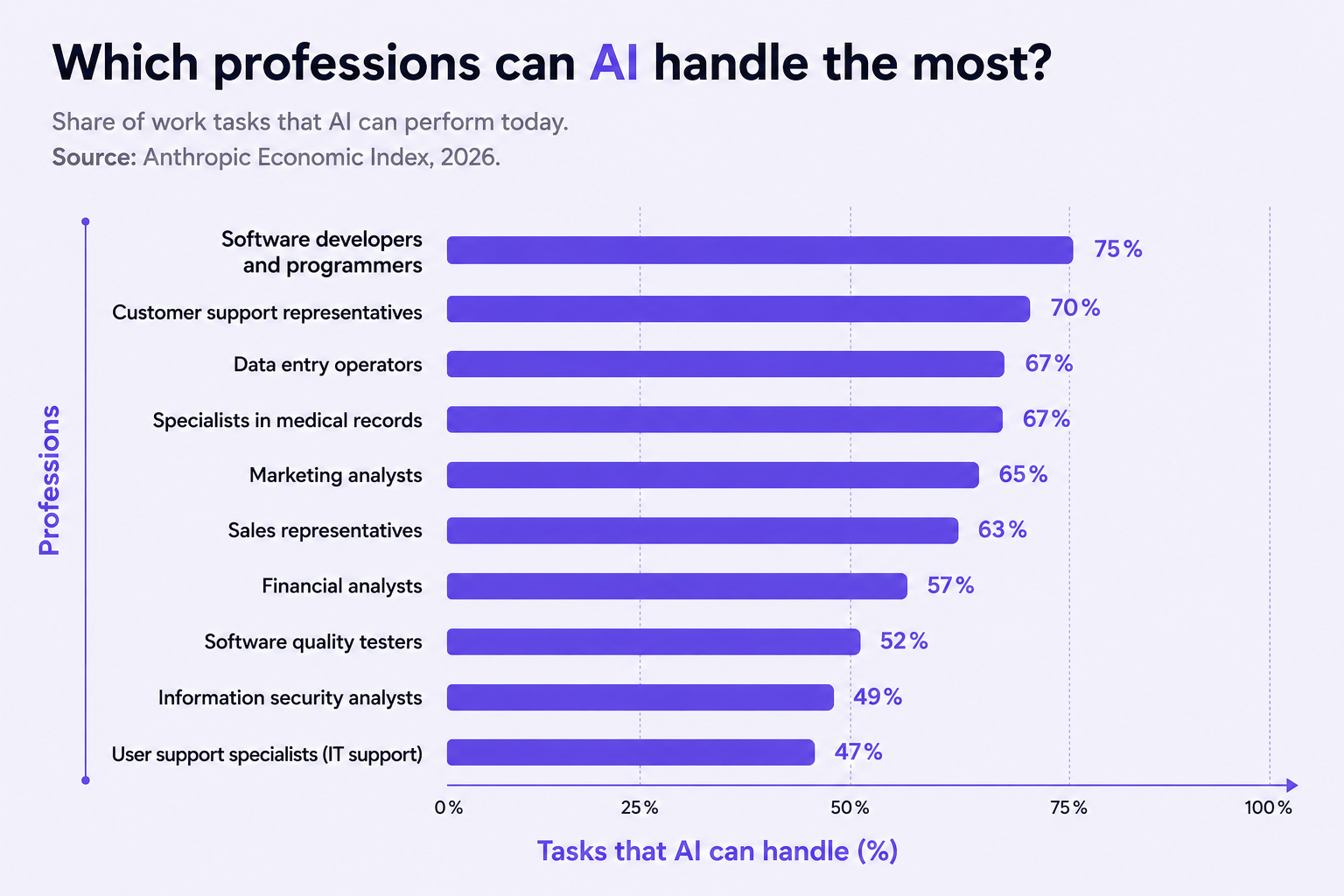
But those numbers need to be read correctly. They don't mean that programmers will cease to exist in a few years. They mean that a large share of what they do day-to-day can now be done by a machine. What remains for people is decision-making in ambiguous situations, checking outputs, and taking responsibility for results.
This is nicely illustrated by translators. Researchers at the CEPR institute reviewed US data from 2010 to 2023 and found that in regions where machine translation spread more widely, significantly fewer new translation jobs were created. By their estimate, around 28,000 positions that would otherwise have appeared simply didn't. Word-for-word translation is indeed declining. But there's growing demand for people who review machine output, correct it, and ensure the text works culturally and contextually — not just linguistically. The profession didn't disappear; it just moved up a level.
What's being created instead
LinkedIn's Jobs on the Rise list for 2026, tracking the fastest-growing roles in the US, is fairly telling. Four of the five fastest-growing roles are directly connected to AI. Leading the list is AI engineer — someone who builds and deploys models. Right behind is AI consultant, helping companies implement AI in the first place. Then come people preparing training data and machine learning researchers.
More interesting than these expected roles, however, is what sits right next to them on the list. Data centre technicians and people managing new infrastructure construction are also growing fast. The AI boom is driving not just software professions but also very tangible work around servers, cooling, and energy.
And then there's a group of professions that barely existed five years ago. Algorithm auditors, who verify that a system isn't discriminating against anyone — this will become increasingly important in Europe under the AI Act. Training data curators, who decide what a model learns from. Conversational interface designers. Or managers of AI agent fleets that automatically handle a company's orders and correspondence. Somewhat paradoxically, even AI's imperfections create work. Someone has to check whether the model made something up.
Three skills gaining in value
Running through all those numbers is one thread. AI replaces individual tasks, not entire professions, and it goes after the most routine ones. Three things are therefore gaining in value.
The first is the ability to verify and interpret — to not take what the model produces as a given, but to be able to judge whether it makes sense. The second is deep expertise in your own field. The better you understand law, medicine, or marketing, the more reliably you'll spot when AI is wrong, and the more valuable you are as the person keeping oversight. The third is soft skills — communication, critical thinking, and the ability to navigate situations without a clear brief. According to Czech HR professionals, these skills are shifting from a nice-to-have advantage to the primary competitive edge.
There's no need to immediately learn to code. A far more realistic first step is to start actively using standard AI tools in your current work so that you can direct and check them. Whoever masters this stops being someone AI threatens and becomes someone who directs it.
Conclusion
The job market won't flip overnight, and most professions won't disappear. But their content is changing, and it's changing fast. Routine moves to the machine; judgement, context, and accountability stay with the person. Those who see this shift early have an advantage. Those who ignore it will find out when their work gets divided between colleagues and tools.
My take? The worst thing is to land on one of two extremes — either ignoring AI or trusting it blindly. Both will cause problems sooner or later. Fear of being replaced by artificial intelligence is understandable, but it's aimed slightly off target. The more realistic question is whether a colleague who learned to work with it before you will pull ahead. And that's actually the good news in all of this — because that part is entirely in your own hands.